

Sacred Woods and Resins: Frankincense, Sandalwood, and Cedarwood for Calm and Reflection
There are certain aromas that seem to slow time the moment they reach the senses.
Warm woods. Ancient resins. The quiet scent of evergreen forests.
For centuries, botanicals such as frankincense, sandalwood, and cedarwood have been used in moments of reflection, meditation, and stillness. These grounding plant aromas are often associated with calming the mind, encouraging slower breathing, and creating a sense of emotional balance. Long before modern wellness language existed, people instinctively understood that certain plant aromas could help calm the mind and bring the body back into balance.
Even today, these sacred woods continue to offer a simple reminder: sometimes the path back to clarity begins with a single breath.
The Language of Botanical Aromas
Plants communicate through chemistry.

The aromatic compounds found in essential oils are part of the plant’s natural defense and communication systems. When we experience these scents, those same compounds interact with receptors connected to the brain’s limbic system — the region involved in emotion, memory, and stress response.
This is one reason aroma can shift how we feel almost instantly.
Certain botanical scents tend to feel uplifting and energizing, while others evoke a sense of grounding and calm.
The oils explored here fall into a category often described as sacred woods and resins — aromas that are warm, earthy, and deeply centering.
Frankincense
The Resin of Reflection
Frankincense is derived from the resin of trees in the Boswellia family, which grow in arid regions of the Middle East and Africa.
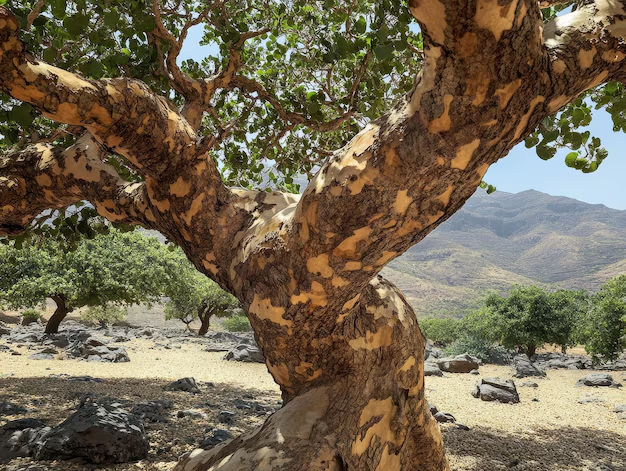
When the bark of the tree is gently scored, it releases a milky sap that hardens into golden resin tears. These resin droplets have been harvested and valued for thousands of years.
The aroma of frankincense is complex — slightly citrusy, subtly sweet, and deeply resinous.
Traditionally, it has been associated with:
• calming the mind
• encouraging slower breathing
• supporting reflective or meditative states
Many people find that frankincense creates a sense of mental clarity and spaciousness, making it a beloved botanical for moments of contemplation.
Sandalwood
The Quieting Wood
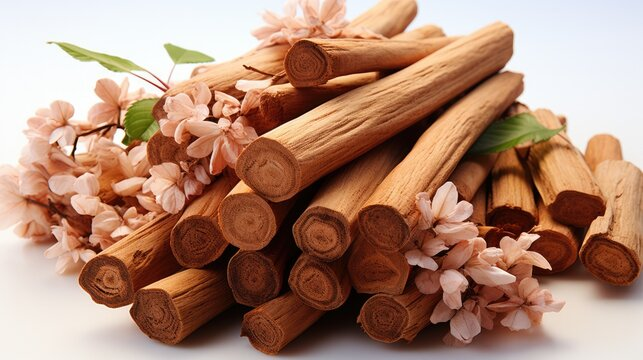
Sandalwood oil is distilled from the heartwood of sandalwood trees, particularly Santalum album, which has historically been cultivated in regions of southern India.
Unlike many essential oils that come from leaves or flowers, sandalwood is derived from the dense inner wood of the tree, giving it its characteristic warm, creamy depth.
The aroma of sandalwood is often described as:
• soft
• smooth
• grounding
• gently sweet
In traditional practices, sandalwood has long been used to help quiet mental restlessness and reconnect the mind with a deeper sense of calm.
Its presence in aromatic blends often brings a feeling of emotional steadiness and inner balance.
Atlas Cedarwood
Strength of the Evergreen Forest
Atlas cedarwood comes from the majestic Cedrus atlantica tree, native to the Atlas Mountains of North Africa.
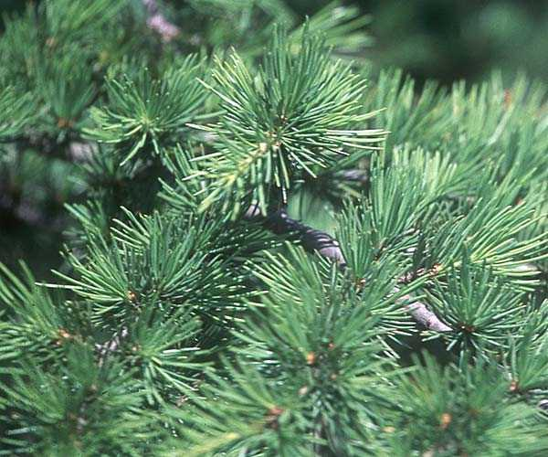
Its scent carries the character of evergreen forests — dry, woody, and quietly stabilizing.
Cedarwood is often associated with:
• grounding the emotions
• creating a calm atmosphere
• supporting feelings of stability and strength
If frankincense lifts the mind and sandalwood softens it, cedarwood helps anchor the experience, creating a sense of rooted calm.
Why These Botanicals Work So Well Together
When combined, frankincense, sandalwood, and cedarwood form a beautifully balanced aromatic profile.
Each plays a distinct role:
Frankincense encourages clarity and reflection.
Sandalwood provides warmth and emotional steadiness.
Cedarwood grounds the blend with quiet forest strength.
Together they create an aroma that feels both uplifting and deeply calming at the same time.
It is the kind of scent that naturally invites the body to slow down.
Aromatic Traditions and Botanical Blends
Because these woods and resins complement one another so well, they are often combined in aromatic blends designed to support moments of calm reflection.

One example is a blend called Spiritual Awakening, developed by Amrita Aromatherapy, which brings together Frankincense, Sandalwood, and Atlas Cedarwood in a thoughtfully balanced formulation..
For readers interested in exploring this blend directly, it can be accessed through my practitioner dispensary connected to Fearless by Nature.
Inspired by Botanical Stillness
The calming qualities of these sacred woods also inspired a sensory creation I offer through AromaTheraPutty called Enlightened.
While essential oils are traditionally experienced through diffusion or topical application, Enlightened brings the aroma of Frankincense, Sandalwood, and Cedarwood into a tactile sensory format designed to encourage moments of quiet reflection.
Its shimmering gold and evergreen tones mirror the themes often associated with these botanicals — illumination, grounding, and the quiet strength of nature.
Sometimes a simple sensory pause can be enough to remind the body how to settle back into balance.
A Simple Grounding Practice
If you have a moment, you might try a brief pause with these calming botanicals.
Take a slow breath in and allow your shoulders to soften.
Notice the aroma of the woods and resins around you.
Let your breath slow naturally as the scent settles in.
Bring your attention back to the present moment.
Even a few seconds of intentional stillness can help the nervous system shift away from stress and toward a more balanced state.
Small rituals like this remind us that calm is often closer than we think.

A Gentle Reminder
Nature offers many subtle tools for supporting emotional balance and nervous system health.
From nourishing foods to grounding aromas, the body responds to signals that encourage calm and stability.
When we begin to notice and integrate these small supports into daily life, wellness often becomes less about striving — and more about remembering how to return to ourselves.
About the Author
At Fearless by Nature, the focus is on helping people rediscover the quiet wisdom of nature through nutrition, botanical education, and mindful living. Drawing inspiration from traditional plant knowledge and modern holistic practices, the work centers on supporting the body’s natural balance while encouraging small daily rituals that nurture both physical and emotional well-being.
Sources & Botanical References
The botanical information discussed in this article is informed by traditional plant knowledge as well as modern research in aromatherapy and phytochemistry.
Almeida-da-Silva, C. L. C., et al. (2022). Effects of Frankincense Compounds on Infection, Inflammation, and Oral Health. Molecules, 27(13), 4174. https://doi.org/10.3390/molecules27134174
Badria, F. A. (2015). Frankincense (Heaven’s Gift): Chemistry, Biology, and Clinical Applications. InTech. https://doi.org/10.5772/59006
Boruah, T., et al. (2023). Sandalwood Essential Oil. In Essential Oils (pp. 121–145). Academic Press. https://doi.org/10.1016/B978-0-323-91740-7.00003-7
Caballero-Gallardo, K., Quintero-Rincón, P., & Olivero-Verbel, J. (2025). Aromatherapy and Essential Oils: Holistic Strategies in Complementary and Alternative Medicine for Integral Wellbeing. Plants, 14(3), 400. https://doi.org/10.3390/plants14030400
Gonçalves, S. D. (2025). Cedarwood Essential Oil (Cedrus spp.): A Forgotten Pharmacological Resource with Emerging Therapeutic Potential. Exploration of Drug Science, 3, 1008131. https://doi.org/10.37349/eds.2025.1008131
Rajsmita, B., & Keshavamurthy, V. (2019). Re-discovering Sandalwood: Beyond Beauty and Fragrance. Indian Dermatology Online Journal, 10(3), 296–297. https://doi.org/10.4103/idoj.IDOJ_357_18
Setzer, W. N., & Satyal, P. (2026). Cedarwood Oils: The Wood Essential Oil Compositions from Trees Known as “Cedar.” Plants, 15(4), 659. https://doi.org/10.3390/plants15040659
Singh, D. V. (2024). Sandalwood: From Field to Industry. International Journal of Phytology Research.
Sun, X., et al. (2025). Frankincense from Boswellia: A Review of Species, Traditional Uses, Phytochemistry, Pharmacology and Toxicology. Chinese Herbal Medicines. https://doi.org/10.1016/j.chmed.2025.09.007
