

How Enzyme Therapy Can Support Your Health
Introduction
Your body is a complex, self-healing system, and within it, enzymes work tirelessly to keep things running smoothly. While most of us are aware of enzymes' role in digestion, they also have many other uses. From healing tissues to reducing inflammation, enzyme therapy is an emerging holistic treatment that can support your body in ways you might not have realized.
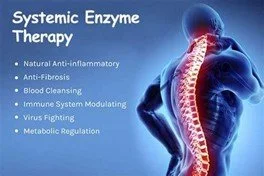
In this blog, we’ll explore enzyme therapy and show how these microscopic molecules can do much more than help digest your food. Learn how enzymes can support your body’s natural processes and offer a more balanced approach to overall health.
What Are Enzymes and Why Are They Important?
At their core, enzymes are proteins that act as catalysts which speed up chemical reactions in the body. These reactions are crucial for digestion, metabolism, energy production, and even immune function. Without enzymes, our bodies couldn’t process food, fight off infections, or even heal from injuries.
Each enzyme is highly specific, meaning it only works on a particular type of molecule or reaction. For example, digestive enzymes break down food into nutrients, while metabolic enzymes help with energy production and tissue repair. This specificity is what makes enzymes such effective "helpers," as they ensure the right chemical reactions happen at just the right time.
The Surprising Role of Enzyme Therapy
While enzymes naturally exist in your body, sometimes they need a little extra support, especially when your body is under stress or facing chronic health issues. This is where enzyme therapy comes into play. Enzyme therapy involves supplementing the body with additional enzymes to aid its healing processes to improve digestion, reduce inflammation, and promote overall wellness.
In recent years, enzymes have been used therapeutically in numerous pathologies including metabolic deficiencies, such as fibrosis conditions, ocular pathologies, joint problems, cancer, and cardiovascular diseases.
Enzymes for Pain and Inflammation Relief

One of the most powerful benefits of enzyme therapy is its ability to address inflammation and pain. Enzymes like bromelain (found in pineapple) and papain (from papaya) have natural antiinflammatory properties. These enzymes can help reduce swelling, ease joint pain, and promote faster healing after injuries or surgery.
Unlike pharmaceutical anti-inflammatories, which can have side effects or mask symptoms, enzyme therapy works by supporting the body’s natural inflammatory response instead of preventing it. Systemic enzyme therapy works holistically by allowing inflammatory processes to progress naturally which overcomes the problems associated with the prevention of inflammation and hinderance of recovery.
Enhancing Digestion and Gut Health
Most people know enzymes for their role in digestion—enzymes break down proteins, fats, and carbohydrates into smaller molecules, allowing your body to absorb essential nutrients. But sometimes, your body doesn’t produce enough digestive enzymes, especially with advancing age, leading to uncomfortable symptoms like bloating, indigestion, and heartburn.
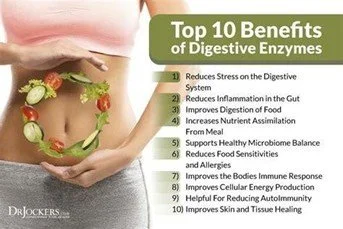
Enzyme therapy can be especially helpful in these cases. By supplementing with enzymes like lipase (for fat digestion) or amylase (for carbohydrate digestion), you can support your digestive system and reduce common issues like gas or acid reflux. This, in turn, leads to improved gut health, better nutrient absorption, and an overall boost in energy.
Immune System Support
Your immune system relies on a delicate balance of cells, proteins, and enzymes to function properly. Enzyme therapy can help enhance the body’s immune response by encouraging the production of immune-boosting compounds and breaking down harmful pathogens. For instance, enzymes like protease can help break down pathogens, toxins, and damaged cells, which supports your body in clearing out potential threats more effectively.
As we all know, maintaining a strong immune system is essential for preventing illness and recovering from infection. Enzyme therapy offers a natural way to strengthen this system and keep your body protected.
How to Use Enzyme Therapy Holistically
Enzyme therapy is not a one-size-fits-all solution. It’s essential to understand that different enzymes serve different purposes, and their use should be tailored to your individual needs. Whether you’re looking to improve digestion, manage pain, support your immune system, or detoxify, enzyme therapy can complement your overall wellness routine.
Before starting enzyme therapy, it's always a good idea to consult with a healthcare professional, especially if you have existing health conditions or are taking other medications. A trained professional can help you determine the right enzymes for your needs and recommend the proper dosage.

Enzymes can be taken in many forms, including pills, powders, or even through enzyme-rich foods like pineapple, papaya, or fermented foods such as kefir, kombucha, and sauerkraut. Regularly incorporating enzyme-rich foods into your diet is a great way to support your body naturally, but enzyme supplements can be a convenient way to give your system that extra boost when needed.
Final Thoughts
Enzymes are more than just digestive helpers, they’re essential to your body’s overall health and well-being. From supporting tissue repair and reducing inflammation to improving digestion and boosting the immune system, enzyme therapy offers a holistic approach to health that taps into the body’s natural healing potential.
References:
Ayodipupo Babalola, B., Ifeolu Akinwande, A., Otunba, A. A., Ebenezer Adebami, G., Babalola, O., & Nwuofo, C. (2024). Therapeutic benefits of Carica papaya: A review on its pharmacological activities and characterization of papain. Arabian Journal of Chemistry, 17(1), 105369. https://doi.org/10.1016/j.arabjc.2023.105369
Belachew, G. (n.d.). Enzymes for Disease Treatment: A Review. https://doi.org/10.26717/BJSTR.2023.49.007809
Chakraborty, A. J., Mitra, S., Tallei, T. E., Tareq, A. M., Nainu, F., Cicia, D., Dhama, K., Emran, T. B., Simal-Gandara, J., & Capasso, R. (2021). Bromelain a Potential Bioactive Compound: A Comprehensive Overview from a Pharmacological Perspective. Life (Basel, Switzerland), 11(4), 317. https://doi.org/10.3390/life11040317
de la Fuente, M., Lombardero, L., Gómez-González, A., Solari, C., AnguloBarturen, I., Acera, A., Vecino, E., Astigarraga, E., & Barreda-Gómez, G. (2021). Enzyme Therapy: Current Challenges and Future Perspectives. International journal of molecular sciences, 22(17), 9181. https://doi.org/10.3390/ijms22179181
Hennigan, J. N., & Lynch, M. D. (2022). The past, present, and future of enzyme-based therapies. Drug discovery today, 27(1), 117–133. https://doi.org/10.1016/j.drudis.2021.09.004
Henrotin, Y. E., Michlmayr, C., Rau, S. M., Quirke, A. M., Bigoni, M., & Ueberall, M. A. (2022). Combination of Enzymes and Rutin to Manage Osteoarthritis Symptoms: Lessons from a Narrative Review of the Literature. Rheumatology and therapy, 9(5), 1305–1327. https://doi.org/10.1007/s40744-022-00472-7
Ianiro, G., Pecere, S., Giorgio, V., Gasbarrini, A., & Cammarota, G. (2016). Digestive Enzyme Supplementation in Gastrointestinal Diseases. Current drug metabolism, 17(2), 187–193. https://doi.org/10.2174/138920021702160114150137
Liu, Y., Li, J., & Lu, Y. (2015). Enzyme therapeutics for systemic detoxification. Advanced Drug Delivery Reviews, 90, 24–39. https://doi.org/10.1016/j.addr.2015.05.005
Marzin, T., Lorkowski, G., Reule, C., Rau, S., Pabst, E., Vester, J. C., & Pabst, H. (2017). Effects of a systemic enzyme therapy in healthy active adults after exhaustive eccentric exercise: a randomised, two-stage, doubleblinded, placebo-controlled trial. BMJ open sport & exercise medicine, 2(1), e000191. https://doi.org/10.1136/bmjsem-2016-000191
Robinson P. K. (2015). Enzymes: principles and biotechnological applications. Essays in biochemistry, 59, 1–41. https://doi.org/10.1042/bse0590001
Yari, M., Ghoshoon, M. B., Vakili, B., & Ghasemi, Y. (2017). Therapeutic Enzymes: Applications and Approaches to Pharmacological Improvement. Current pharmaceutical biotechnology, 18(7), 531–540. https://doi.org/10.2174/1389201018666170808150742
