

Siberian Ginseng and its Role in Adrenal and Thyroid Health
In today’s fast-paced world, it is easy to end up feeling overwhelmed with stress and drained of your energy. Many aspects of our modern life also involve repetitive exposure to stress which can cause detrimental biological stress responses. One area in particular that is affected are the adrenal glands—small organs that play a vital role in managing stress and regulating hormones.
Fortunately, Siberian ginseng, a plant used for centuries in traditional medicine, can help support adrenal health and improve how we cope with stress.
What is Siberian Ginseng?
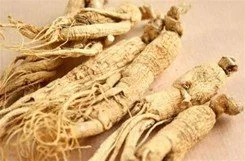
Siberian ginseng (also called Eleutherococcus senticosus) is an adaptogen—a natural substance that helps the body manage stress. It’s been used to increase energy, improve stamina, and promote overall vitality, making it a powerful tool for balancing adrenal function.
The Role of the Adrenal Glands
The adrenal glands produce hormones like cortisol, which help us respond to stress. When we’re constantly stressed, our adrenal glands work overtime, which can lead to adrenal fatigue, making us feel tired, drained, and overwhelmed.

How Siberian Ginseng Supports Adrenal and Thyroid Health
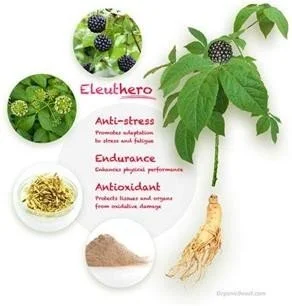
Regulates Cortisol Levels: In the short term, cortisol helps you respond to stress, but if it’s constantly elevated, it can lead to exhaustion, irritability, and even weight gain, and can also interfere with thyroid function. Siberian ginseng helps to normalize cortisol production, allowing your body to manage stress more effectively without burning out your adrenal glands.
Boosts Energy: By increasing stamina and reducing fatigue, Siberian ginseng can gradually provide a natural and long-lasting energy boost without the crash that comes from substances like caffeine. Those suffering with thyroid issues commonly struggle with tiredness and fatigue also and stand to benefit from a boost in energy.
Strengthens Immunity: It helps support and regulate the immune system, which can weaken and change under stress, by encouraging your body to respond better to infections and bounce back more quickly from illness, thus maintaining homeostasis. A stronger immune system is also beneficial for autoimmune conditions such as Hashimoto’s which is thought to attack the thyroid gland.
Promotes Stress Adaptation: One of the most significant benefits of Siberian ginseng is its ability to help the body adapt to various types of stress through the regulation of the sympathetic nervous system known for the “fight or flight” response. By reducing the intensity of this response, Siberian ginseng helps reduce feelings of anxiety and stress, allowing you to stay calm and focused in challenging situations which can positively impact your thyroid too.
How to Use Siberian Ginseng
Siberian ginseng is generally considered safe and is available in capsules, powders, teas, and tinctures. A typical dose is 100-200 mg per day, but it’s always best to start with a lower dose and adjust as needed. You can also try Siberian ginseng tea for a gentler, soothing option.
Final Thoughts
Siberian ginseng is a natural way to support adrenal health and indirectly benefits the thyroid by increasing energy and reducing the effects of stress. By incorporating it into your routine, you can help your body adapt to life’s challenges more effectively, maintaining balance and vitality!
References
Arring NM, Millstine D, Marks LA, Nail LM. Ginseng as a Treatment for Fatigue: A Systematic Review. J Altern Complement Med. 2018 Jul;24(7):624-633. doi: 10.1089/acm.2017.0361. Epub 2018 Apr 6. PMID: 29624410.
Cambria C, Sabir S, Shorter IC. Ginseng. [Updated 2023 May 1]. In: StatPearls [Internet]. Treasure Island (FL): StatPearls Publishing; 2025 Jan-. Available from: https://www.ncbi.nlm.nih.gov/books/NBK538198/
Lee, S., & Rhee, D. K. (2017). Effects of ginseng on stress-related depression, anxiety, and the hypothalamic-pituitary-adrenal axis. Journal of ginseng research, 41(4), 589–594. https://doi.org/10.1016/j.jgr.2017.01.010
Oliynyk, S., & Oh, S. (2013). Actoprotective effect of ginseng: improving mental and physical performance. Journal of ginseng research, 37(2), 144–166. https://doi.org/10.5142/jgr.2013.37.144
Ratan, Z. A., Haidere, M. F., Hong, Y. H., Park, S. H., Lee, J. O., Lee, J., & Cho, J. Y. (2021). Pharmacological potential of ginseng and its major component ginsenosides. Journal of ginseng research, 45(2), 199–210. https://doi.org/10.1016/j.jgr.2020.02.004
Wentz, Dr. I., & Wentz, Dr. I. WentzDr. I. (2024, July 31). Adaptogenic Herbs & Hashimoto’s - dr.
Izabella Wentz. Dr. Izabella Wentz, PharmD. https://thyroidpharmacist.com/articles/adaptogenic-herbs-benefit-hashimotos/
Yang, J., Shin, K. M., Abu Dabrh, A. M., Bierle, D. M., Zhou, X., Bauer, B. A., & Mohabbat, A. B. (2022). Ginseng for the Treatment of Chronic Fatigue Syndrome: A Systematic Review of Clinical Studies. Global advances in health and medicine, 11, 2164957X221079790. https://doi.org/10.1177/2164957X221079790
