

Quercetin and Its Role in Lung Health
When it comes to maintaining good lung health, many of us know that not smoking, exercising, and avoiding pollutants are wise choices to make. But have you ever heard of a natural compound called quercetin that can help keep your lungs healthy? Let’s explore what quercetin is, how it can benefit your lungs, and how you might incorporate it into your wellness routine.
What Is Quercetin?
Quercetin is a type of plant pigment known as a flavonoid, found in many fruits, vegetables, and plants. Quercetin is one of the most well-known and studied flavonoids with a structure that gives it higher antioxidant activity than that of anthocyanin, another flavonoid and powerful antioxidant.

It’s naturally found in foods like apples, onions, berries, grapes, and citrus fruits. It’s also present in kale, broccoli, and black tea.
While quercetin has numerous health benefits, including antioxidant, antimicrobial, anti-inflammatory, antiviral, and anticancer properties, here we’ll focus on its role in lung health.
How Quercetin Supports Lung Health
While lung health can be influenced by exposure to toxins, allergens, and chronic inflammation, quercetin plays a supportive role in these areas as well.
1. Fights Inflammation
Inflammation is a key factor in many lung conditions, such as asthma, bronchitis, and chronic obstructive pulmonary disease (COPD). When your lungs become inflamed, it can make breathing difficult and lead to other complications. Quercetin helps fight this inflammation by blocking certain molecules that trigger the inflammatory response. By doing this, it can reduce swelling in the airways and improve lung function.
2. Reduces Allergic Reactions
If you suffer from allergies that affect your breathing, quercetin can be helpful as it works as a natural antihistamine. Histamines are chemicals released by your body in response to allergens, causing symptoms like sneezing, wheezing, and runny noses. Quercetin can help prevent the release of histamines, potentially reducing allergy symptoms and making it easier to breathe, especially during allergy season.

3. Protects Against Oxidative Stress
Your lungs are constantly exposed to environmental factors like pollution, cigarette smoke, and even the air you breathe when exercising. Over time, these can create free radicals – unstable molecules that can damage cells and tissues in your body, including your lungs. This damage is known as oxidative stress, and it can lead to chronic conditions like
emphysema and fibrosis. Quercetin’s antioxidant properties help neutralize free radicals, protecting your lungs from oxidative damage and supporting overall lung health.
4. Supports Respiratory Conditions
Studies suggest that quercetin may benefit individuals with conditions like asthma or COPD. It’s believed to help by reducing airway constriction, improving airflow, and making it easier to breathe. While more research is needed, quercetin’s potential to manage symptoms and improve quality of life for those with chronic respiratory conditions is promising. How Can You Include Quercetin in Your Diet?
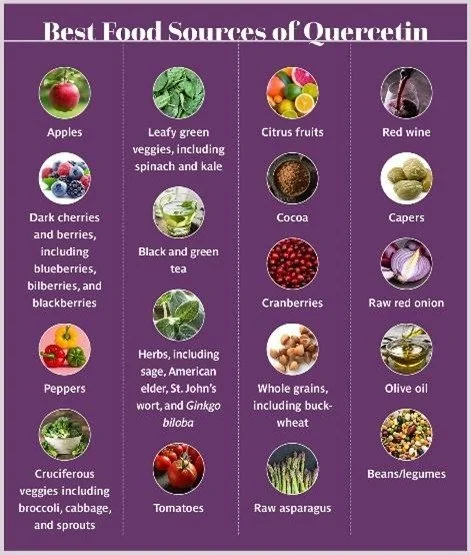
Fortunately, quercetin is readily available through a variety of foods including apples, onions, berries, grapes, and citrus fruits. Keep in mind that the highest loss of quercetin happens when onions outer layers are peeled. Incorporating these foods into your meals and snacks will boost your intake.
Drink Green and Black Tea: Green and black tea are great sources of quercetin and other beneficial antioxidants. A few cups a day can help keep your lungs in top shape.
Try Quercetin Supplements: If you find it difficult to get enough quercetin through food alone, supplements are widely available while research is also being conducted to improve its bioavailability.
Final Thoughts
Quercetin is a natural powerhouse with impressive potential for supporting lung health. By reducing inflammation, fighting oxidative stress, and even helping with allergies, it can play a vital role in maintaining good respiratory function. Incorporating quercetin-rich foods into your diet and considering supplements could be a great way to give your lungs some extra care.
References:
Aghababaei F, Hadidi M. Recent Advances in Potential Health Benefits of Quercetin. Pharmaceuticals (Basel). 2023 Jul 18;16(7):1020. doi: 10.3390/ph16071020. PMID: 37513932; PMCID: PMC10384403.
Araújo NPDS, de Matos NA, Oliveira M, de Souza ABF, Castro TF, Machado-Júnior PA, de Souza DMS, Talvani A, Cangussú SD, de Menezes RCA, Bezerra FS. Quercetin Improves Pulmonary Function and Prevents Emphysema Caused by Exposure to Cigarette Smoke in Male Mice. Antioxidants (Basel). 2022 Jan 18;11(2):181. doi: 10.3390/antiox11020181. PMID: 35204064; PMCID: PMC8868486.
Huang M, Liu X, Ren Y, Huang Q, Shi Y, Yuan P, Chen M. Quercetin: A Flavonoid with Potential for Treating Acute Lung Injury. Drug Des Devel Ther. 2024 Dec 6;18:5709-5728. doi: 10.2147/DDDT.S499037. PMID: 39659949; PMCID: PMC11630707.
McCluskey, E.S., Liu, N., Pandey, A. et al. Quercetin improves epithelial regeneration from airway basal cells of COPD patients. Respir Res 25, 120 (2024). https://doi.org/10.1186/s12931024-02742-0
Mlcek, J., Jurikova, T., Skrovankova, S., & Sochor, J. (2016). Quercetin and Its Anti-Allergic Immune Response. Molecules (Basel, Switzerland), 21(5), 623. https://doi.org/10.3390/molecules21050623
Salehi B, Machin L, Monzote L, Sharifi-Rad J, Ezzat SM, Salem MA, Merghany RM, El Mahdy NM, Kılıç CS, Sytar O, Sharifi-Rad M, Sharopov F, Martins N, Martorell M, Cho WC. Therapeutic Potential of Quercetin: New Insights and Perspectives for Human Health. ACS Omega. 2020 May 14;5(20):11849-11872. doi:10.1021/acsomega.0c01818. PMID: 32478277; PMCID: PMC7254783.
